
In the sun-drenched squares surrounding Rome’s Trevi Fountain, along the narrow arcades of Venice’s Grand Canal, or beneath the neon glow of Bangkok’s Khaosan Road, millions of international travelers sit down each day to enjoy what they hope will be an authentic taste of local culture. For many, however, the experience ends not with culinary delight, but with severe check shock: a bill inflated by unposted fees, overpriced fish priced by weight without clear disclosures, or mediocre pre-packaged meals sold at five-star prices.
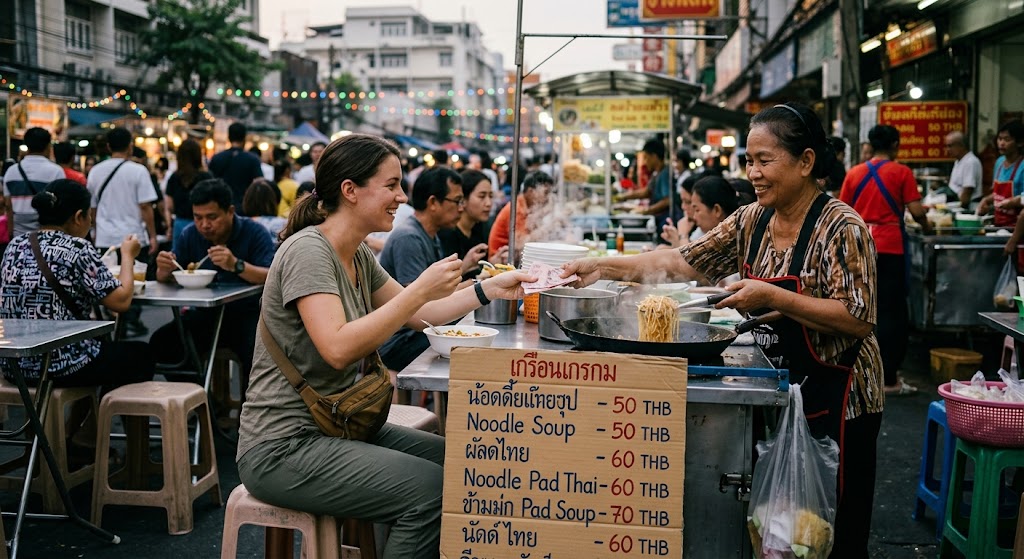
The global resurgence of international travel has intensified a long-standing paradox of the hospitality industry. While food is celebrated as one of the primary gateways to experiencing a foreign culture, the economic real estate surrounding major landmarks has created a high-stakes ecosystem for predatory dining. In these high-density tourist corridors, high commercial rents and an endless supply of one-time foot traffic frequently incentivize high-volume sales over quality, consistency, and fair pricing.
Navigating this terrain does not require abandoning major historical sites or subsisting exclusively on grocery store staples. Instead, avoiding tourist traps and securing genuine regional cuisine at fair prices requires an understanding of how tourist-trap economics operate, how to identify hidden billing mechanics, and how to apply practical tactical rules to find where local residents actually eat.
The Economics of the Tourist Trap
To understand why so many tourist-adjacent restaurants deliver disappointing meals at inflated prices, one must examine the underlying business model of the high-volume dining hub.
Unlike a traditional neighborhood bistro, which relies on repeat customers, neighborhood word-of-mouth, and sustained community goodwill to survive, a restaurant situated directly opposite a major cathedral, museum, or cruise ship terminal operates on an entirely different economic logic. Its customer base is transient by definition. A diner visiting a historic plaza in Paris, Florence, or Barcelona is unlikely to return the following week, regardless of whether the meal was exceptional or atrocious.
This reality shifts the restaurant’s operational incentives:
- Location Over Product: Real estate costs directly adjacent to world-famous landmarks are astronomical. To cover high leases, operators prioritize maximum table turnover and high markups over expensive, fresh ingredients or skilled kitchen labor.
- Aggressive Customer Acquisition: Because these establishments cannot rely on organic reputation, they invest heavily in upfront acquisition tactics—employing sidewalk hosts, deploying multi-language signage, and buying prime physical placement along foot-traffic bottlenecks.
- Standardized Inventory: Serving hundreds of rotating diners daily often requires standardized, quick-assembly menus. Rather than simmering stocks for hours or sourcing daily produce from local markets, high-volume tourist spots frequently rely on frozen, pre-cooked, or mass-distributed commercial products designed for rapid reheating.
When financial survival is detached from customer retention, price inflation and predatory service tactics often become normalized features of daily business.
Spotting the Red Flags Before Taking a Seat
Recognizing a tourist trap before stepping inside is the first and most effective defense against overpaying for subpar food. While every city has unique dining quirks, predatory establishments worldwide share remarkably consistent visual and operational signals.
1. The Sidewalk Barker
If a staff member stands on the sidewalk waving menus, calling out in multiple languages, or promising “special discounts just for you,” treat it as an immediate warning sign. Authentic, high-quality establishments rarely need to solicit passersby aggressively; their reputations, regular clientele, and food speak for themselves.
2. The Multi-Page “Encyclopedia” Menu
A menu offering an endless array of choices—combining local traditional dishes with international items like burgers, sushi, pizza, and steaks—is a clear indicator of a kitchen relying on frozen inventory. A single kitchen cannot fresh-prep 80 distinct dishes across three different culinary traditions every single day. True local spots typically feature short, focused menus centered on seasonal ingredients and specific regional specialties.
3. Glossy Stock Photos and Flag Icons
Menus laminated in plastic and plastered with bright, stock photographs of every dish are designed to overcome language barriers quickly and push high-margin items. Similarly, menus featuring national flags next to translations signal an establishment designed entirely for international tour groups rather than local residents.
4. The Demographics of the Dining Room
Before accepting a table, observe who is currently eating. If every table is occupied by travelers carrying daypacks and reading guidebooks, while no local language is heard among the diners, you are in an enclave tailored exclusively for tourists. Look for places filled with office workers, neighborhood families, or solo diners reading local newspapers.
Anatomy of the Menu Scam: Unpacking Hidden Fees
Beyond poor culinary quality, the most frustrating aspect of tourist-trap dining is the arrival of an unexpectedly high bill. While some charges are legitimate regional customs, predatory operators often exploit unfamiliarity with local norms to inflate checks artificially.
Common Billing Pitfalls to Watch For

[ Unpriced Specials ]   --->  Order without asking price  ---> Escalates bill by 3x–5x
[ Fish / Meat by Weight] --->  Price listed "per 100g"      ---> Bill charged on massive unsized portion
[ Unrequested Starters ] --->  Bread/olives brought to table ---> Charged per item upon billing
[ Dual Menu Pricing ]   --->  Low price on street menu     ---> Higher price on final invoice
The “Market Price” and “By Weight” Arbitrage
One of the most widespread international dining scams involves fresh fish, premium steaks, or regional delicacies like truffles priced “per 100 grams” rather than per portion.
A diner sees a figure like €8 listed on the menu, assuming it represents the cost of the main course. When the bill arrives, the total for the dish exceeds €100 because the kitchen selected a whole 1.2-kilogram specimen without confirming the final weight or cost with the customer beforehand.
- The Defense: Never order a item priced “per 100g” or listed as “Market Price” without asking the server to state the exact total price in writing before the kitchen begins preparation.
Unrequested Starters and the “Couvert” Trap
In several Southern European countries, placing small items on the table upon seating is standard practice. In Portugal, this is known as the couvert (olives, bread, cheese, butter); in Italy, a per-person coperto (cover charge for bread and service) is common and legally recognized.
However, a scam occurs when predatory establishments use this custom to overcharge dramatically. They may place elaborate appetizer platters, seafood bites, or expensive bottled water on the table unprompted, treating them as complimentary welcome gifts, only to charge exorbitant rates for each item consumed—or even just opened.
- The Defense: Clarify immediately whether items brought to the table are included or charged separately. If you do not intend to pay for unrequested starters, politely ask the server to remove them from the table before touching anything.
The Bait-and-Switch Menu
In some high-density areas, restaurants present passersby with a sidewalk menu displaying affordable prices, but issue a different menu inside—or calculate the final check based on higher rates. Other venues charge an unposted “terrace fee” or “live music surcharge” that can add 20 to 50 percent to the total bill simply for sitting outdoors.
- The Defense: Take a quick photo of the sidewalk menu or the printed price list on your smartphone before sitting down. Having a visual record makes resolving billing discrepancies straightforward when the check arrives.
The Geography of Authenticity: The Two-Block Rule
Finding outstanding, fairly priced food in a major travel destination often comes down to spatial geography. Urban space surrounding landmarks is divided into distinct commercial zones dictated by foot traffic density.
Landmark Perimeter Dining Zones

+-------------------------------------------------------+
|  LANDMARK SQUARE (0–100m)                              |
|  Peak Rents | Tourist Traps | Glossy Menus | High Fees |
+-------------------------------------------------------+
                           |
                           v  (Walk 2 to 3 Blocks)
+-------------------------------------------------------+
|  RESIDENTIAL / SIDE STREET (200–500m)                  |
|  Fair Prices | Seasonal Menus | Local Regulars        |
+-------------------------------------------------------+
The Two-Block Rule
The simplest and most reliable rule of thumb for finding great food is to walk two to three blocks away from any major tourist attraction, cathedral, or central square.
The moment you turn off the main pedestrian arterial into side streets or residential corridors:
- Commercial rent prices drop significantly, allowing restaurant owners to focus on food quality rather than volume.
- Foot traffic shifts from tour groups to local workers, shop owners, and residents.
- Menus transition from multi-language glossy posters to chalkboard daily specials written in the local language.
Identify Natural Local Hubs
Instead of searching for restaurants directly around tourist sights, direct your attention toward neighborhood hubs where locals carry out daily life:
- Municipal Food Markets: Public indoor markets—such as Mercado de La Boquería in Barcelona, Mercato Centrale in Florence, or Torvehallerne in Copenhagen—contain stall counters serving exceptionally fresh regional dishes at transparent prices.
- University Districts: Neighborhoods surrounding major universities are surrounded by affordable eateries, casual bistros, and coffee shops designed for student budgets.
- Residential Squares: Look for public plazas that feature playgrounds, bench seating for seniors, and neighborhood hardware stores rather than souvenir shops.
Tactical Insider Strategies for Eating Like a Local
Moving beyond simple avoidance tactics requires adopting the habits of experienced, culturally aware travelers.
1. Synchronize with Local Meal Times
Eating on a tourist schedule virtually guarantees dining surrounded by other tourists. In many cultures, dining schedules differ significantly from the standard North American or Northern European 12:00 PM lunch and 6:00 PM dinner windows.
- Spain: Lunch typically runs from 2:00 PM to 4:00 PM; dinner rarely begins before 9:00 PM.
- Italy: Lunch is taken between 1:00 PM and 2:30 PM; dinner starts around 8:00 PM or 8:30 PM.
- Argentina: Dinner service rarely picks up before 10:00 PM.
Establishments that open for dinner at 5:30 PM in Southern Europe or South America are catering almost exclusively to foreign travelers. Adapting your schedule to local hours ensures you dine when kitchens are fully staffed, ingredients are fresh, and local atmosphere is at its peak.
2. Seek Out Fixed-Price Daily Lunch Menus
In many parts of Europe and Latin America, the best value of the day is found at lunch through fixed-price worker menus (Menu del Día in Spain, Pranzo di Lavoro or Menu Fisso in Italy, Menú del Día across Latin America).
Originally created to provide affordable, nutritious meals for working professionals, these two- or three-course lunch specials typically include bread, a beverage (often house wine or water), and a choice of starter and main course for a fraction of the evening à la carte price. Because these menus change daily based on what the chef purchased at the morning market, the food is fresh, seasonal, and authentic.
3. Ask Frontline Locals the Right Questions
When asking for restaurant recommendations, the phrasing of your question determines the quality of the answer. If you ask a hotel concierge or taxi driver, “Where is a good place for dinner?”, they will often direct you to a high-end, tourist-friendly establishment where they know foreigners feel comfortable—or where they receive a referral commission.
Instead, ask targeted, specific questions:
- “Where do you personally go for lunch with your family on your day off?”
- “Where is the best place nearby to get [specific regional dish]?”
- “Where do the people who work in this neighborhood eat lunch?”
Inquire with independent shopkeepers, museum attendants, baristas at small coffee bars, or bookstore staff for unbiased recommendations.
4. Rely on Regional Culinary Classifications
Rather than relying solely on global user-review platforms, which are easily manipulated by fake reviews or skewed by tourist expectations, look for country-specific culinary guides and non-profit food movement endorsements.
- Italy: Look for stickers from Gambero Rosso or the Slow Food Osterie d’Italia guide on doorframes.
- France: Consult the Michelin Bib Gourmand selection, which highlights high-quality establishments offering complete meals at moderate prices.
- Japan: Use localized platforms like Tabelog, where ratings are strictly moderated and scores above 3.5 out of 5 indicate exceptional quality.
What to Do When the Bill Arrives: Asserting Your Rights
If you suspect you are being overcharged or presented with fraudulent fees at the end of a meal, handle the situation calmly, systematically, and firmly.
Step 1: Request an Itemized Receipt
Never accept a handwritten total written on a blank slip of paper or verbal declaration of the total price. Request a fully itemized receipt (conto dettagliato in Italy, factura detallada in Spain, facture détaillée in France) that lists every dish, beverage, tax, and service charge individually.
Step 2: Compare Against Printed Prices
Check the itemized receipt against the menu prices. If an unposted fee has been added—such as an arbitrary service charge, an unlisted table fee, or an inflated price for a special—politely point to the printed menu and ask the server to adjust the total to reflect the published rates.
In most developed nations, consumer protection laws strictly mandate that all mandatory fees and taxes must be clearly displayed on printed menus before a customer orders. Unposted charges are legally unenforceable.
Step 3: Pay by Card and Retain Documentation
If a restaurant manager refuses to correct an obvious invoice error or unposted fee, avoid escalating into a dramatic altercation. Pay the bill using a major credit card, keep a copy of the itemized receipt, take a photo of the menu showing the listed prices, and document the venue’s name and address.
Once in a safe environment, contact your credit card issuer to initiate a partial chargeback for the unauthorized or fraudulent charges, providing your photographic evidence. Card networks routinely side with consumers when presented with clear documentation of unposted fees.
Preserving the Joy of Discovery
Eating well while traveling should not feel like navigating a minefield of potential scams. By understanding the commercial mechanics of high-traffic tourist zones and taking a few deliberate steps away from the crowds, you transform dining from a high-risk expense into one of the most rewarding aspects of your journey.
The goal of seeking out local eateries is not merely about saving money—it is about restoring cultural connection. Sitting in a modest neighborhood trattoria, a bustling market stall, or a residential tapas bar offers an authentic window into the daily rhythm of a city. By walking past the sidewalk barkers and seeking out real neighborhood dining, you ensure that every meal contributes to lasting travel memories rather than regrettable receipts.