
As the sun sets over the zinc rooftops of Paris Gare du Nord, passengers board a long, navy-blue train bound for Berlin. By the time the sun rises over the German capital the following morning, travelers will step off the platform refreshed, having crossed four international borders while fast asleep.
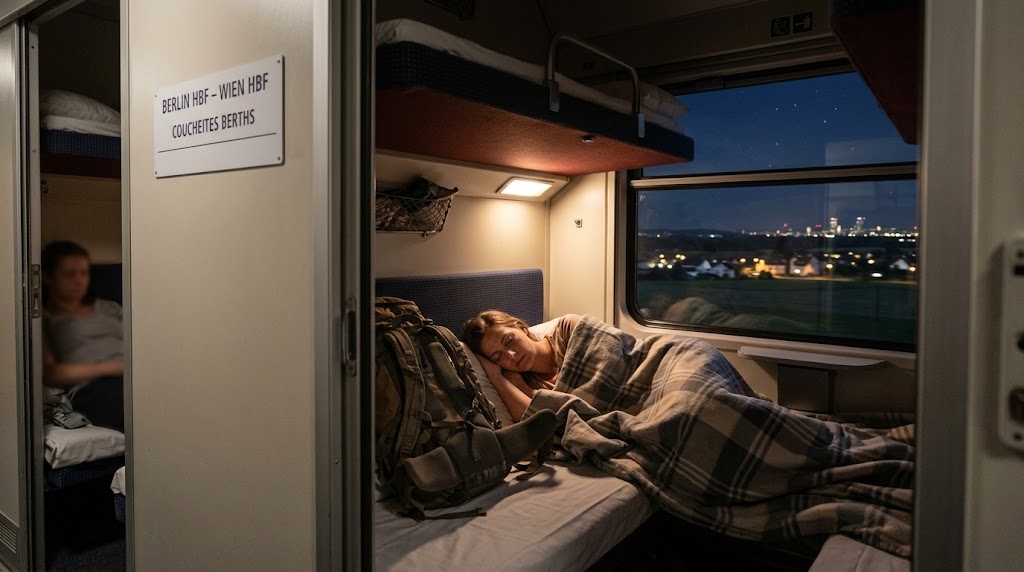
Across the European continent, overnight rail travel is experiencing a dramatic and unprecedented renaissance. Once considered a nostalgic relic of 20th-century travel—nearly forced into extinction by low-cost airlines and high-speed daytime networks—the night train has reemerged as one of the most practical, sustainable, and financially savvy ways to explore Europe.
At the heart of this resurgence lies a compelling economic equation: by combining long-distance transit and a night’s lodging into a single ticket, travelers can eliminate expensive hotel bills while reclaiming valuable daylight hours for sightseeing. As hotel rates across Europe’s primary tourist destinations continue to hit record highs, the overnight sleeper train presents an increasingly attractive alternative for budget-conscious backpackers, remote workers, and leisure travelers alike.
The Financial Equation: Rolling Lodging vs. Fixed Real Estate
Understanding the true value of European night trains requires looking beyond the face value of a rail ticket and examining the total cost of a travel day.
In major European metropolitan centers—such as Amsterdam, Paris, Venice, and Munich—the cost of mid-range hotel accommodation routinely exceeds €150 to €250 per night during peak season. When paired with a daytime high-speed rail ticket or a short-haul flight, a single transfer between two distant cities can easily cost a pair of travelers €300 to €500 in combined lodging and transit.
Overnight trains disrupt this financial calculus by serving as a moving hotel room. While pricing fluctuates based on demand and advanced booking, sleeper train accommodations cater to a wide spectrum of budgets:
- Basic Seated Carriages: Prices often start as low as €29.90 to €49.99 for simple reclining seats, providing an ultra-budget option for resilient travelers looking strictly for transit.
- Shared Couchette Berths: Ranging from €49.99 to €90 per person, shared four-berth or six-berth compartments offer lie-flat bunks with fresh linens, blankets, and pillows, striking an ideal balance between affordability and comfort.
- Solo Pods (Mini Cabins): Pioneered on next-generation fleets, private single-occupancy capsules are available for approximately €60 to €100, offering individual lockable sleeping quarters at price points comparable to shared couchettes.
- Private Sleeper Compartments: Ranging from €120 to over €300 per compartment, deluxe private options feature proper mattresses, private washbasins, en-suite showers, and complimentary room-service breakfasts.
When a traveler deducts the cost of a saved night in a city-center hotel, even high-tier sleeper compartments frequently emerge as cost-neutral or significantly cheaper than traditional hotel-plus-flight combinations.
Furthermore, because night trains depart and arrive at central station hubs located in city centers, travelers avoid the peripheral expenses associated with airport transfers, such as expensive taxi fares or dedicated express bus lines.
The Sleeper Network Renaissance
The current revival of overnight rail is driven by a unique coalition of state-backed investments, private startups, and shifting consumer attitudes toward environmental sustainability.
During the late 2000s and 2010s, legacy rail operators across Western Europe rapidly dismantled their overnight services. High maintenance costs for specialized sleeping cars, combined with fierce price competition from budget airlines like Ryanair and EasyJet, led national carriers to label sleeper routes as chronic loss-makers.
The turning point came via Austria’s national railway operator, ÖBB (Österreichische Bundesbahnen). Recognizing that environmental awareness and flight fatigue were changing consumer preferences, ÖBB bought up discarded sleeper carriages from other national operators and launched its dedicated “Nightjet” brand in 2016.
What began as a calculated risk turned into a massive success story. Today, ÖBB operates Europe’s largest overnight rail network, anchoring a web of routes centered on Vienna, Zurich, Munich, Berlin, and Rome. To keep pace with soaring demand, ÖBB introduced a fleet of brand-new, Siemens-built “new-generation” Nightjet trains. Operating at speeds up to 230 kilometers per hour, these modern trains feature keyless NFC door locks, integrated wireless phone charging, free high-speed Wi-Fi, and private en-suite bathrooms across their top-tier cabins.
Alongside state operators, private open-access companies have stepped in to fill long-neglected corridors. Independent Belgian-Dutch cooperative European Sleeper launched its flagship route connecting Brussels and Amsterdam to Berlin and Prague, followed by a direct sleeper link connecting Paris to Berlin and a scheduled cross-Alpine line reaching Milan.
Simultaneously, state railways in Poland, the Czech Republic, and Sweden have expanded international overnight services, creating an interconnected web that spans from the Baltic Sea to the Mediterranean.
Comparing Transit Modes: Night Trains vs. Aviation and Daytime Rail
When planning a multi-city European itinerary, travelers generally choose between three primary transit options: short-haul budget flights, daytime high-speed rail, or overnight sleeper trains. Evaluating these options across time, cost, and psychological comfort highlights why sleeper rail holds a distinct edge.
Total Travel Time Breakdown (Example: Paris to Berlin)

Short-Haul Flight:
[Center to Airport: 1h] + [Security/Wait: 2h] + [Flight: 1.5h] + [Baggage/Exit: 1h] + [Airport to Center: 1h]
= ~6.5 Hours of Interrupted Daylight Travel + Hotel Cost

Daytime High-Speed Rail:
[Station Arrival: 0.5h] + [Train Ride: 8h] + [City Transfer: 0.5h]
= ~9 Hours of Lost Daylight Sightseeing + Hotel Cost

Night Train (Sleeper):
[Boarding: 0.5h] + [Sleep/Transit: 9–10h overnight] + [Disembark: 0.5h]
= Zero Daylight Lost + Zero Hotel Cost
Time Efficiency and Reclaimed Days
While a flight between Paris and Berlin takes only 90 minutes in the air, the true door-to-door transit time tells a different story.
Traversing city centers to distant outer-ring airports, arriving two hours prior to departure for security screening, waiting at baggage carousels, and taking ground transport back into the destination city stretches a brief flight into a six- to seven-hour ordeal. Crucially, this time is consumed during peak daytime hours, sacrificing an entire day of a vacation.
Daytime high-speed trains offer far more comfort than flying, but long trans-European routes—such as Brussels to Vienna or Amsterdam to Zurich—still require six to ten hours in a seat during daylight hours.
Night trains invert this dynamic completely. By traveling while passengers sleep, the journey takes place during hours that would otherwise be spent motionless in a hotel room. Passengers board in the evening, read or relax, sleep for seven to eight hours, and wake up at their destination in time for morning coffee, effectively adding a full day of sightseeing to their itinerary.
Ancillary Costs and Baggage Rules
Budget airlines frequently advertise low baseline ticket prices, but these figures routinely exclude mandatory add-ons. Fees for carry-on suitcases, checked bags, seat selection, and airport transport quickly double or triple the initial ticket cost.
Overnight rail pricing, by contrast, is transparent. Sleeper and couchette tickets include generous baggage allowances—typically as much luggage as a traveler can safely carry and store in their compartment—without extra charges for liquids, oversized bags, or last-minute weight checks.
Environmental Footprint
For climate-conscious travelers, the environmental argument for night trains is overwhelming. Rail transport in Europe is largely electrified, with leading operators drawing energy from renewable sources.
A passenger traveling overnight by train generates up to 85 to 90 percent fewer carbon emissions compared to taking an equivalent short-haul flight. As major European nations enforce bans on short domestic flights where viable rail alternatives exist, overnight trains represent the gold standard for sustainable regional transit.
Decoding Cabin Classes: Choosing the Right Comfort Level
Navigating the options available on modern European night trains can be confusing for first-time bookers. Carriages are generally divided into three distinct service classes, each catering to different comfort preferences and price points.
1. Seated Coaches (Sitzwagen)
The most economical option consists of standard open-plan carriages or six-seat compartments with reclining seats.
- Best For: Solo travelers on extreme budgets, last-minute bookers, and short overnight hops (4 to 6 hours).
- Amenities: Basic overhead luggage storage, shared restrooms at the end of the coach, and dimmable overhead lighting.
- Considerations: Sleeping upright in a room with shifting light and foot traffic can be challenging. Security is lower than in locked compartments, and passenger turnover occurs at intermediate stops throughout the night.
2. Couchette Compartments (Liegewagen)
Couchettes represent the classic middle ground of European sleeper travel. These are shared rooms designed for simple, comfortable sleep without luxury extras.
- Best For: Families, small groups of friends, and budget-minded solo travelers.
- Configuration: Compartments feature four or six padded bunks stacked vertically along the walls. During the evening, lower bunks function as bench seats before attendants convert them into flat beds.
- Amenities: Freshly laundered sheets, pillows, light blankets, bottle of water, shared washrooms down the corridor, and lockable compartment doors. Most operators offer female-only couchette compartments for solo women travelers.
- ÖBB Mini Cabins: Available on newer Nightjet trains, these individual capsule pods offer a sub-category within couchette pricing. Solo travelers get a fully enclosed, lockable pod equipped with an integrated mirror, reading light, storage locker for shoes and hand luggage, and a folding table, delivering high privacy without paying for a private compartment.
3. Sleeper Cars (Schlafwagen)
Sleeper compartments are the premium tier of overnight rail, offering the closest equivalent to a traditional hotel room.
- Best For: Couples, business travelers, and those prioritizing maximum comfort and privacy.
- Configuration: Available as private single, double, or triple compartments featuring fixed, high-quality mattresses made up with full duvets and pillows.
- Standard vs. Deluxe: Standard sleeper cabins include a private washbasin with running water, while “Deluxe” or “Comfort Plus” cabins feature private en-suite bathrooms equipped with a shower, toilet, and premium toiletries.
- Amenities: Keycard door access, room service options, power outlets, Wi-Fi, and a complimentary hot or cold breakfast served directly to the compartment by a dedicated car attendant.
Strategic Booking Strategies and Major Routes
To maximize both savings and travel comfort, mastering the logistics of European rail booking is essential.
Key Night Train Hubs and Top Corridors
Europe’s sleeper network anchors several major gateway hubs that allow travelers to build seamless multi-country itineraries:
- The Vienna Hub (ÖBB Nightjet): As the epicenter of European night trains, Vienna offers direct overnight connections to Amsterdam, Brussels, Hamburg, Berlin, Zurich, Milan, Venice, Rome, Warsaw, and Bucharest.
- The Low Countries & German Axis (European Sleeper & ÖBB): Brussels and Amsterdam serve as Western gateways, offering direct sleeper connections east to Berlin, Dresden, and Prague, as well as south through Switzerland to Milan.
- The Alpine and Italian Connections: Overnight routes linking Munich and Zurich to Florence, Rome, and the Ligurian coast allow travelers to cross the Alps while sleeping, arriving in Northern Italy in time for breakfast.
- The Scandinavian Links: Swedish operator Snälltåget and national carrier SJ operate overnight sleepers connecting Stockholm and Malmö to Hamburg and Berlin, while night trains run north across the Arctic Circle to Lapland.
Popular Overnight Routes & Typical Journey Times

Paris Gare du Nord  ======>  Berlin Hauptbahnhof       (~15.5 hours)
Brussels-Midi       ======>  Prague Hlavní Nádraží    (~18.5 hours)
Vienna Hauptbahnhof ======>  Amsterdam Centraal       (~14.5 hours)
Zurich HB           ======>  Hamburg Hauptbahnhof     (~12.0 hours)
Munich Hauptbahnhof ======>  Roma Termini             (~13.0 hours)
Booking Windows and Advance Discounts
Unlike traditional regional trains, high-speed night trains operate on dynamic pricing models similar to airlines. Ticket inventories typically open between 60 to 180 days prior to departure, depending on the operator and seasonal timetable changes.
- Book Early for Savings: Operators offer discounted advance fares (such as ÖBB’s Sparschiene rates). Booking a couchette or private sleeper 60 to 90 days in advance can save up to 60 percent compared to late-stage bookings.
- Interrail and Eurail Passes: Travelers utilizing an Interrail or Eurail pass can use their pass to cover the baseline transit fare of a night train. However, pass holders must purchase a mandatory seat, couchette, or sleeper reservation supplement in advance. On popular summer routes, couchette and sleeper supplements sell out weeks ahead of departure.
- Use Official Operator Booking Channels: To avoid steep markups from third-party booking portals, purchase tickets directly through official rail sites such as ÖBB (nightjet.com), European Sleeper (europeansleeper.eu), or national rail portals like DB (bahn.com) and SBB (sbb.ch).
Practical Tips for a Smooth Night on the Rails
While modern sleeper trains are designed for comfort, overnight rail travel remains a unique environment that requires basic preparation.
- Pack an Overnight Daypack: Store large suitcases in overhead racks or luggage compartments, and keep essential items—toiletries, medications, eye mask, earplugs, phone charger, and passport—in a small, easily accessible daypack.
- Prioritize Security: When staying in shared couchettes, keep high-value items (wallet, passport, phone) under your pillow or inside your sleeping bag. Compartment doors should be locked from the inside once all passengers are settled for the night.
- Bring Personal Snacks and Water: While sleeper cabins include breakfast and couchette attendants sell basic drinks and light snacks, dining car options on night trains can be limited or non-existent depending on the carriage configuration. Carrying water and simple food items ensures you stay comfortable.
- Prepare for Temperature Variations: Train heating and air conditioning systems can fluctuate overnight. Wearing layered, comfortable clothing ensures a good night’s sleep regardless of cabin temperature.
- Set an Alarm: If your destination is an intermediate stop along a longer route rather than the final terminus, set an alarm 30 minutes prior to arrival to allow time to pack your bags and collect your belongings before the train reaches the station.
The Verdict: A Smarter Way to See Europe
As European tourism grows increasingly dense and expensive, the night train offers a refreshing antidote to the friction of modern travel. By combining logistics and lodging, overnight rail strips away the stress of airport security queues, mitigates soaring hotel expenses, and drastically reduces carbon footprints.
Waking up to the sunrise over the Czech countryside, watching the Italian Alps roll past your compartment window, or stepping directly off a train into the center of Berlin remains one of travel’s great pleasures. For travelers seeking to stretch their budgets while maximizing their time across the continent, taking the night train is not merely a nostalgic choice—it is one of the smartest strategies in modern European travel.