
On a warm afternoon in central Southern Europe, two distinct travel experiences unfold less than two hours apart. In one famous canal city, thousands of visitors squeeze across a stone bridge, shuffling past overpriced souvenir kiosks while waiting in a ninety-minute line just to buy an espresso. Hotel rooms in the historic center routinely exceed $400 a night, municipal entry fees are assessed at the city gate, and dining options are dominated by rigid, tourist-targeted menus.
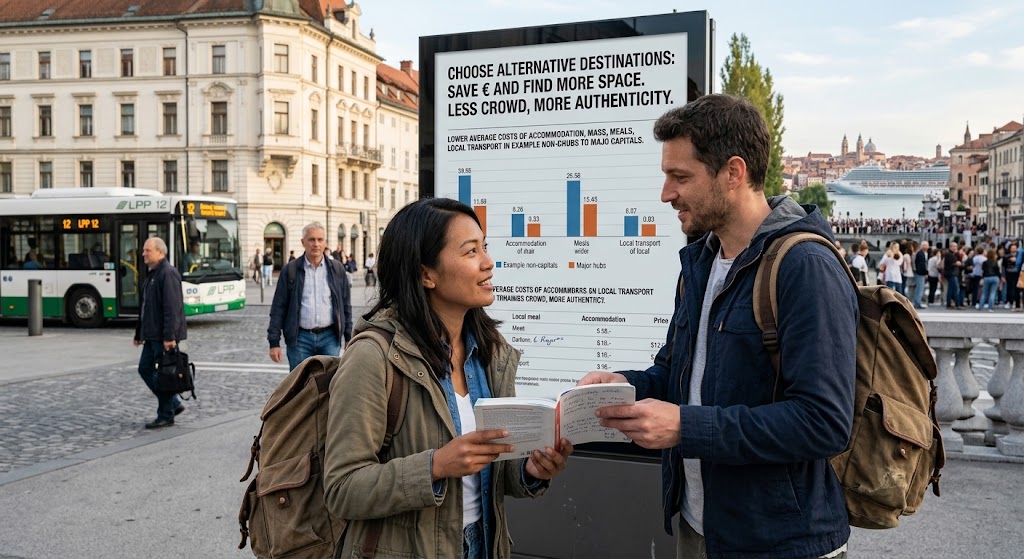
Two train stops down the line, in a historic regional city built around the same river network, the atmosphere is entirely different. Travelers sit outside at independent neighborhood cafes alongside local university students and shopkeepers. A glass of regional wine costs three dollars, a three-course lunch of fresh, handmade pasta is served for twelve dollars, and boutique accommodations inside a converted medieval townhouse cost a fraction of the price found in the mega-hub nearby.
This contrast illustrates one of the most compelling shifts in modern international travel. Overtourism is no longer viewed simply as an environmental crisis or an inconvenience for city planners; it has become a major financial burden for travelers. As primary capital cities and viral hotspots respond to overcrowding by raising visitor taxes, capping short-term rentals, and enforcing dynamic surge pricing, the cost of visiting the world’s most famous landmarks has skyrocketed.
Choosing alternative destinations—often referred to in travel industry analysis as “second cities” or “destination dupes”—has evolved from a modest budget compromise into a primary strategy for intelligent exploration.Swapping saturated hotspots for culturally rich alternatives allows travelers to cut lodging, dining, and transit expenses by 40 to 70 percent while enjoying a far more relaxed, authentic journey.
The Economics of Overtourism: Why Popularity Costs So Much
To understand why alternative destinations save travelers significant amounts of money, one must look at how overtourism distorts local economies. When tens of millions of visitors descend on a compact geographic area—such as the historic centers of Venice, Amsterdam, Barcelona, or Kyoto—demand completely overwhelms local infrastructure.
This imbalance creates specific cost pressures that are passed directly to the consumer:
- Lodging Scarcity and Surge Pricing: In saturated markets, hotel room inventory fills months in advance. Algorithmic pricing models automatically inflate room rates during peak seasons. Furthermore, as municipal governments enact strict caps or outright bans on short-term holiday rentals to protect local housing markets, overall lodging inventory shrinks further, driving baseline prices higher.
- Escalating Municipal Surcharges: To fund street cleaning, security, and infrastructure repairs caused by heavy foot traffic, cities are imposing aggressive local taxes. These include nightly per-person hotel taxes, cruise ship disembarkation fees, and daily access fees for day-trippers.
- Tourist-Trap Inflation: In heavy tourist zones, restaurants and shops operate on a high-volume, low-repeat business model. Because businesses do not rely on local repeat customers to survive, they often charge premium prices for low-quality, pre-packaged food and imported souvenirs.
- The Opportunity Cost of Waiting: Time is a finite resource on any vacation. Spending three hours standing in line for a cathedral tower or waiting for a table at a viral restaurant consumes valuable vacation hours that carry a tangible personal cost.
When travelers insist on visiting only top-tier bucket-list cities during peak months, a substantial portion of their vacation budget pays for the friction of overcrowding rather than the quality of the experience.
The Financial Math of Alternative Destinations
Alternative destinations offer an immediate economic rebalancing. These are cities, regions, and coastal zones that possess similar architectural heritage, culinary traditions, and natural beauty as primary hotspots, but operate with normal, resident-focused economies rather than inflated tourist pricing.
The price differentials between primary hubs and their logical alternatives reveal dramatic savings across every major spending category:
Spain: Barcelona vs. Valencia
Barcelona received tens of millions of visitors in recent years, driving central hotel rates and dining costs to historic highs.By contrast, Valencia—located just down the Mediterranean coast—offers world-class modernist architecture, expansive beaches, a preserved historic quarter, and a rich culinary tradition as the birthplace of paella.
- The Cost Difference: Average hotel rates in Valencia are roughly 40 to 50 percent lower than in Barcelona. A traditional multi-course menú del día (lunch menu) in Valencia costs significantly less while featuring fresh ingredients sourced directly from the city’s Central Market.
The Low Countries: Amsterdam vs. Utrecht or Ghent
Amsterdam’s dense canal belt struggles under heavy visitor numbers, prompting the city to enforce some of the highest municipal tourist taxes in Europe. Utrecht in the Netherlands, or Ghent in nearby Belgium, feature stunning medieval canals, gabled guild houses, and vibrant cafe cultures.
- The Cost Difference: Accommodation in Utrecht or Ghent costs up to 60 percent less per night than comparable canal-side lodging in central Amsterdam or Bruges. Because both are thriving university cities, dining and entertainment options are priced for local student and resident budgets rather than international tourists.
The Adriatic: Dubrovnik vs. Kotor
The walled Old Town of Dubrovnik, Croatia, routinely experiences extreme crowding when multiple cruise ships dock simultaneously, resulting in expensive entry tickets, crowded walking corridors, and high restaurant bills. Just across the border in Montenegro, the fjord-like Bay of Kotor features a magnificently preserved medieval walled city set against dramatic limestone cliffs.
- The Cost Difference:Travelers visiting Kotor experience equivalent Venetian-era architecture and coastal scenery while paying 50 to 60 percent less for accommodations, boat tours, and seafood dining.
Japan: Kyoto vs. Kanazawa
Kyoto’s historic geisha districts and temple complexes face intense overcrowding, leading to street closures and long waits for regional transit. Kanazawa, often called “Little Kyoto,” boasts preserved samurai and geisha neighborhoods, exquisite traditional gardens (including Kenroku-en), and a world-class food scene.
- The Cost Difference: High-speed bullet trains connect Tokyo directly to Kanazawa, where boutique Japanese inns (ryokans) and modern hotels cost roughly half the price of equivalent lodging in Kyoto, with far easier access to cultural sites.
Beyond Lodging: How Alternatives Lower Daily Expenses
While lower hotel rates account for the largest percentage of savings, choosing an alternative destination lowers every daily micro-transaction throughout a trip.
1. Dining and Culinary Value
In secondary cities, restaurants cater to residents who live and work in the neighborhood. Kitchens rely on seasonal produce from nearby farms rather than expensive imported items.
A traveler ordering a morning coffee and pastry in a secondary city pays standard resident prices—often $2 to $3 total—compared to $8 to $10 in a primary tourist plaza. Midday set-lunch menus in secondary destinations offer multi-course meals including wine or water for $12 to $15, allowing travelers to eat exceptionally well on a modest daily allowance.
2. Local Transit and Accessibility
Saturated capital cities often require long, expensive transfers from distant suburban airports or require navigating complex, high-cost urban transport zones. Secondary cities tend to be more compact, highly walkable, and seamlessly connected by regional passenger rail.
Exploring a city on foot or utilizing inexpensive municipal trams eliminates the need for expensive taxis or ride-hailing services, keeping daily transportation costs near zero.
3. Cultural Admissions and Entertainment
In heavily touristed capitals, major museums and historical sites often require booking timed-entry tickets weeks in advance, with admission prices reaching $25 to $40 per person.
In secondary cultural centers, regional state museums, historic churches, and municipal art galleries are often free to enter or charge nominal admission fees of $5 to $10. Furthermore, outdoor cultural assets—such as historic plazas, public parks, coastal promenades, and architectural districts—can be explored entirely for free without wrestling through security barriers or crowds.
The Positive Economic Loop: Supporting Local Communities
Choosing alternative destinations delivers profound benefits that extend far beyond a personal bank account. It plays a vital role in creating a more sustainable, equitable global tourism economy.
When money is spent in hyper-touristed mega-hubs, a large percentage of those funds suffers from “tourism leakage”—flowing directly out of the city to multinational hotel corporations, international cruise lines, and global booking platforms.Little of that wealth filters down to the local residents who bear the daily environmental and infrastructure costs of mass tourism.
By shifting spending toward secondary and tertiary cities, travelers participate in a direct, positive economic loop:
- Direct Family Reinvestment:Money spent at independent guesthouses, neighborhood bakeries, and regional craft shops goes directly into the hands of local families, supporting neighborhood livelihoods.
- Relieving Urban Strain:Redirecting foot traffic away from fragile, overcrowded historic centers helps preserve delicate cultural heritage sites and reduces the strain on municipal sanitation and water systems.
- Revitalizing Regional Economies: Tourism revenue helps maintain regional passenger rail lines, preserve historic architecture in smaller towns, and support traditional agricultural supply chains that might otherwise collapse under economic pressure.
A Strategic Framework for Finding High-Value Alternatives
Uncovering high-value alternative destinations does not require hours of complex research. By applying a few straightforward planning principles, travelers can systematically identify rewarding, low-cost destinations for any trip.
The 60-Minute Rail Radius
When researching a famous destination, look at a regional passenger rail map and identify cities located 30 to 70 minutes outside the primary hub. These surrounding regional cities share the same regional geography, climate, and architectural traditions, but operate at a fraction of the cost. Using a quiet regional city as a home base allows you to explore the famous hub on an easy day trip while returning to a peaceful, affordable hotel at night.
Seek Out Regional University Capitals
Cities with large university populations are natural sanctuaries for budget-conscious travelers. Universities ensure that a city maintains a lively, year-round cultural calendar, excellent public transit, affordable dining options, and a creative local atmosphere that remains independent of international tourist volume.
Leverage Native Language Searches
When searching for destination inspiration online, translate specific terms into the local language. Searching for regional terms—such as Tavola Calda in Italy, Imbiss in Germany, or Comida Corrida in Mexico—reveals neighborhood dining halls and regional towns that cater directly to native residents rather than international tour groups.
Embrace the Shoulder Seasons
To amplify the savings of an alternative destination, time your visit for the shoulder seasons (early spring or late autumn). During these months, accommodation prices in secondary cities drop even lower, weather conditions remain pleasant for walking, and local hosts have ample time to engage in meaningful conversations with visitors.
Reclaiming the Art of Travel
The rise of alternative destinations marks a necessary and refreshing evolution in how we explore the world. The legacy model of travel—paying exorbitant prices to stand in crowded lines, eat standardized food, and view famous monuments through the elevated smartphones of a thousand strangers—is rapidly giving way to a far more thoughtful approach.
Choosing the alternative path is not an exercise in settling for second best. It is an intentional choice for higher quality, deeper cultural connection, and financial intelligence.
By stepping away from the viral tourist trail, you protect fragile global heritage, support authentic host communities, and discover that the most memorable travel experiences are often the ones that leave your vacation budget completely intact.